Private & Confidential - For Intended Recipient Only
Saraswati
Temple Arts
Investor Presentation
A structured overview of Saraswati Temple Arts Phase I - the development thesis, financial framework, investment options, and the path to partnership.
Strictly Private & Confidential
This document is prepared for qualified investors only. It does not constitute a regulated financial product, prospectus, or binding offer. All financial figures are indicative projections requiring independent verification before any investment decision is made.
Context & Origin
Where This
Story Begins
Five years ago, the founder arrived at a ridgeline in the Petanu River Valley outside Ubud and recognised something rare: a place where land, culture, and community exist in genuine alignment. What grew there - organically, without external capital - is Saraswati Temple Arts: a living cultural sanctuary that has hosted international retreat leaders, artists, healers, and community builders from across the world.
This was not built on a business plan. It was built on presence, relationship, and a deep belief that the land wanted to be something extraordinary. Approximately $300,000 has been invested independently over five years - in the property, in infrastructure, in cultural programming. That is the foundation now seeking its next phase of development.
The project is at an inflection point. The freehold property - 0.46 hectares of owned land on the Petanu ridgeline - is under active acquisition. The legal entity, PT Saraswati Temple Arts (PMA), is fully established (NIB: 0212210026279, registered December 2021). The vision is structured, the development plan is detailed, the community is real.
"Saraswati Temple Arts is not a resort project. It is the seed of a new way of living in a landscape - where the returns flow to investors, to the land, and to the community that makes it possible."
The project is now seeking aligned capital partners for Phase 1 activation - investors who understand that the most durable returns in Bali over the next decade will come from assets that cannot be replicated by capital alone.
The Asset
The Freehold Campus -
What We Are Securing
The 0.46-hectare freehold property at Tengkulak Kaja, Ubud sits on the northwest ridge of the Petanu River Valley - 10 minutes from the cultural centre of Ubud, surrounded by rice terraces, jungle, and river valley. The existing built area is approximately 1,800 sqm of structures with a long operational history as a retreat and gathering venue.
Title Type - All Parcels
Hak Milik (Freehold)
Four individual registered freehold certificates under active acquisition
Total Combined Area
4,640 M² (46.4 Are)
Four parcels: 820 + 820 + 2,000 + 1,000 M² = 4,640 M² total
Purchase Price (Gross)
~USD 1,200,000
Less ~$300K prior investment = ~$900K net new capital required
Indicative Market Value
~USD 1,490,000
Market comparables; KJPP formal valuation pending
Existing Built Area
~1,800 sqm
Main villa + ancillary structures across the campus
Legal Entity
PT Saraswati Temple Arts PMA
NIB 0212210026279 - established December 2021
| Certificate |
Title Type |
Desa / Village |
Area (M²) |
Area (Are) |
Notes |
| HM No. 144 |
Hak Milik |
Kemenuh, Kec. Sukawati, Gianyar |
820 M² |
8.2 are |
Buku Tanah No. 3868745 · BPN Gianyar |
| HM No. 145 |
Hak Milik |
Kemenuh, Kec. Sukawati, Gianyar |
820 M² |
8.2 are |
Buku Tanah No. 3868747 · BPN Gianyar |
| HM No. 149 |
Hak Milik |
Kemenuh, Kec. Sukawati, Gianyar |
2,000 M² |
20.0 are |
Largest parcel - primary development site |
| HM No. 4049 |
Hak Milik |
Sb. Tengkulak, Kec. Sukawati, Gianyar |
1,000 M² |
10.0 are |
Issued 12 May 2008 · Surat Ukur No. 600/2008 |
| TOTAL |
Four registered Hak Milik certificates · Kab. Gianyar, Bali |
4,640 M² |
46.4 are |
All under active acquisition at ~USD 1.2M |
Certificate data sourced from BPN-registered Buku Tanah (Land Book) documents on file. All title information requires independent legal verification by a qualified Indonesian notary before any transaction is executed.
The images below show the existing structures and site character of the Saraswati campus today - five years of careful stewardship visible in every corner of the property.
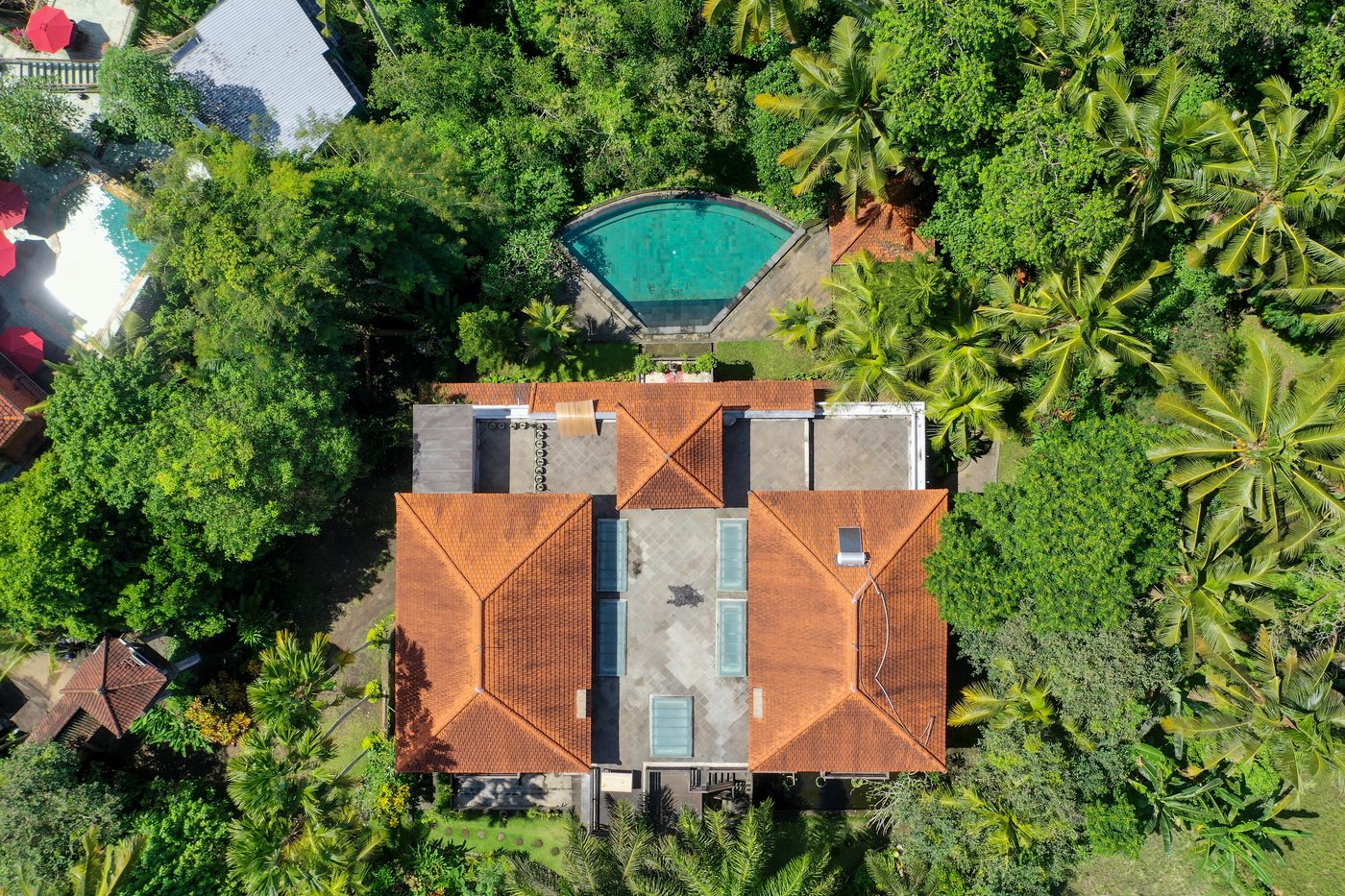
Existing Structure - Main Villa
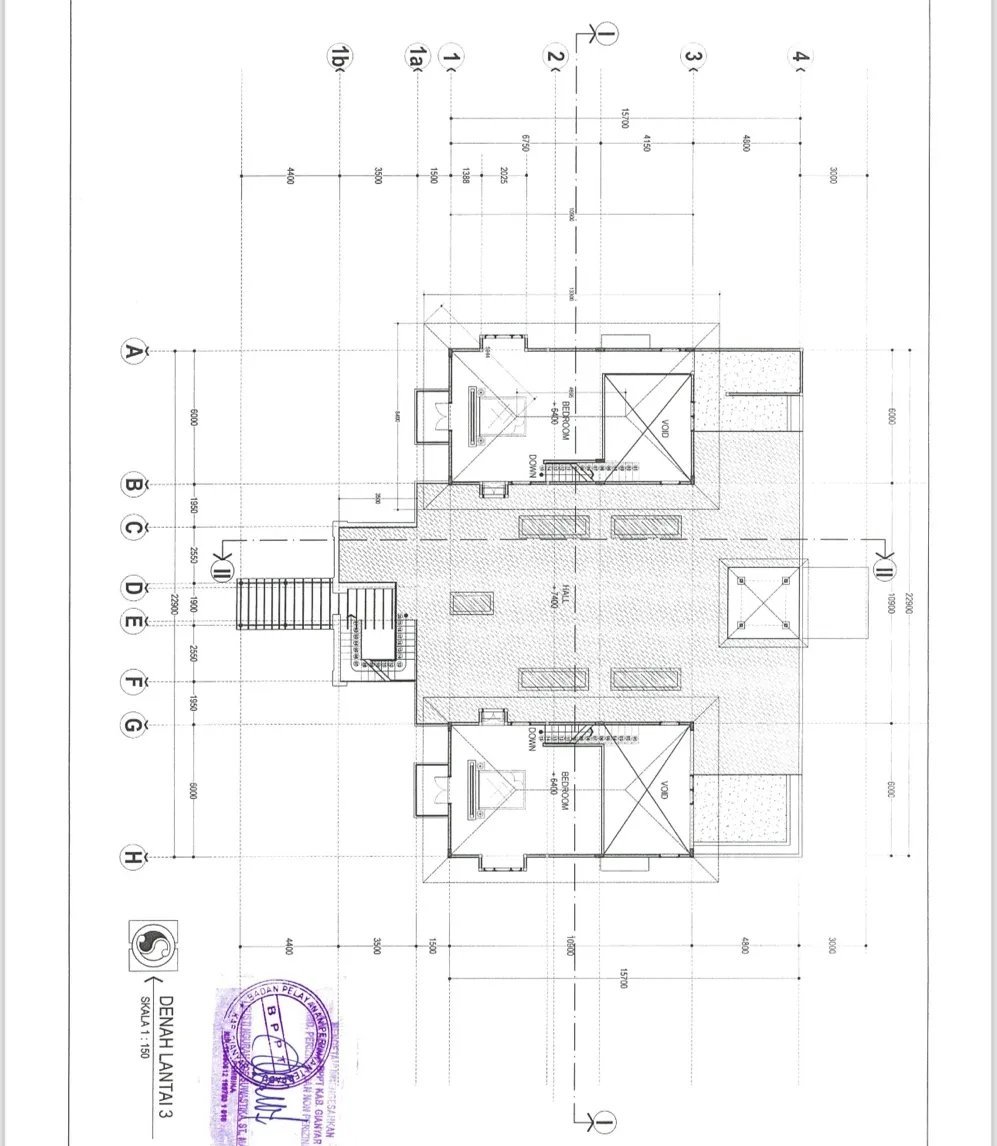
Existing Structure - Floor Plan (Denah Lantai 3)
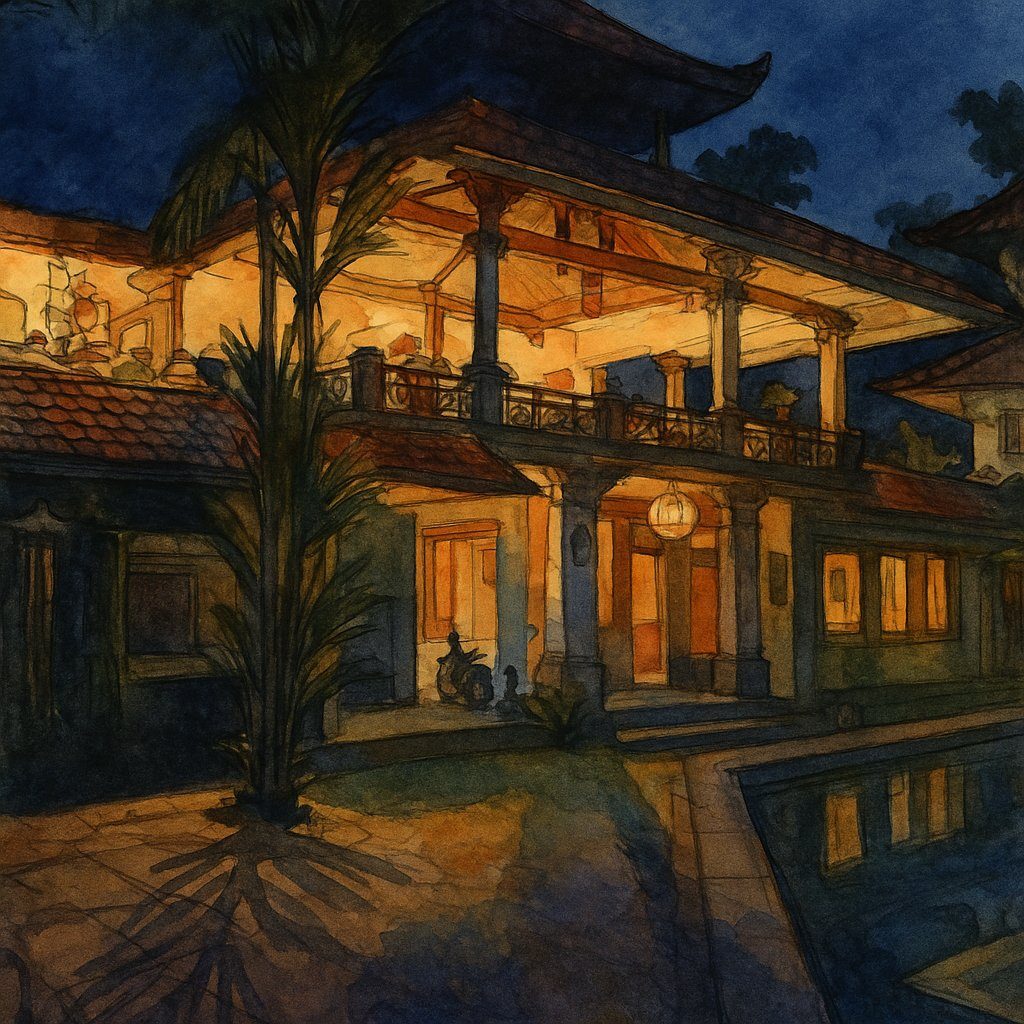
Existing Structure - Evening Character
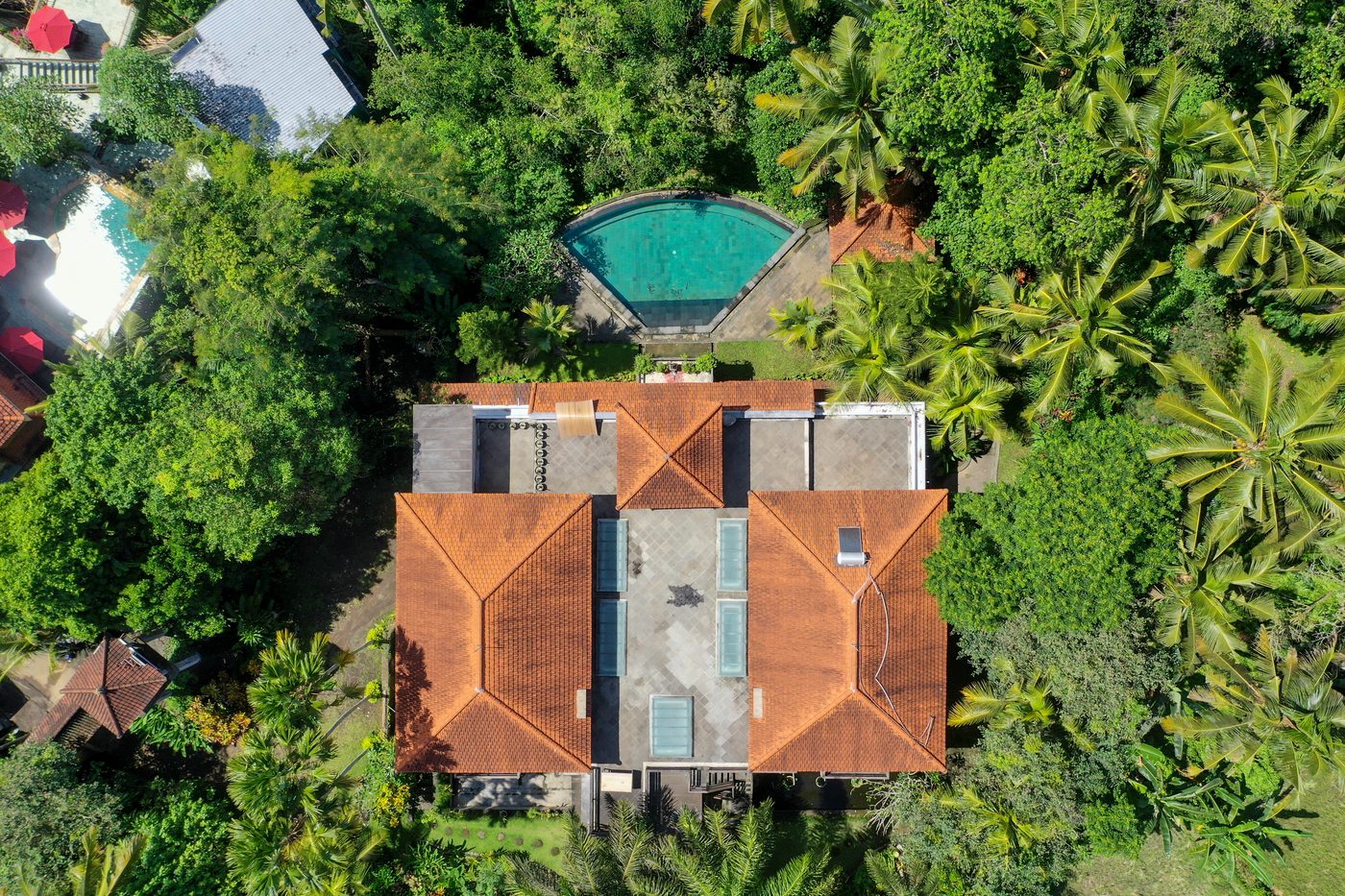
Aerial View - Existing Structure & Pool
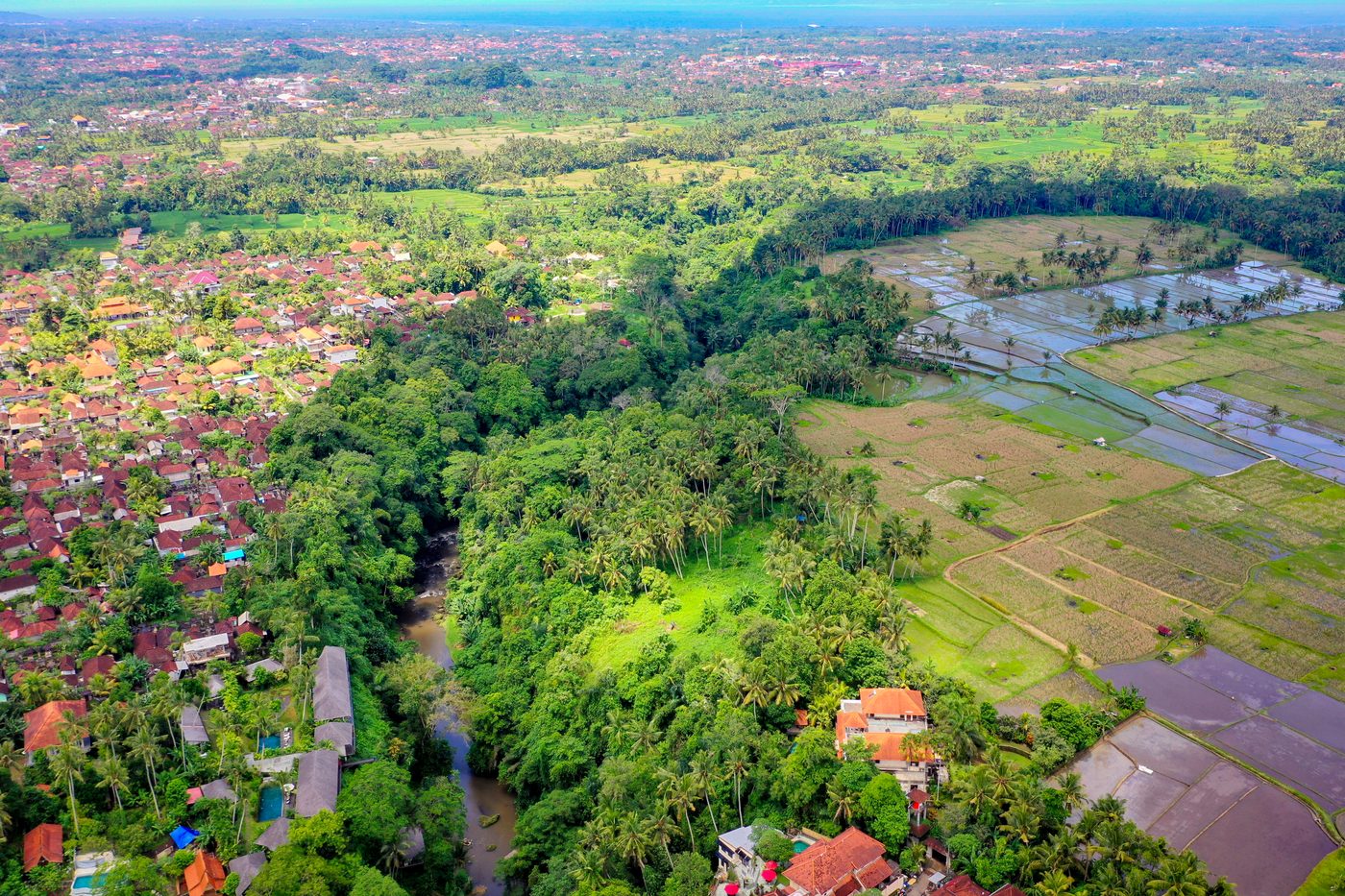
Site Context - Petanu River Valley, Ubud
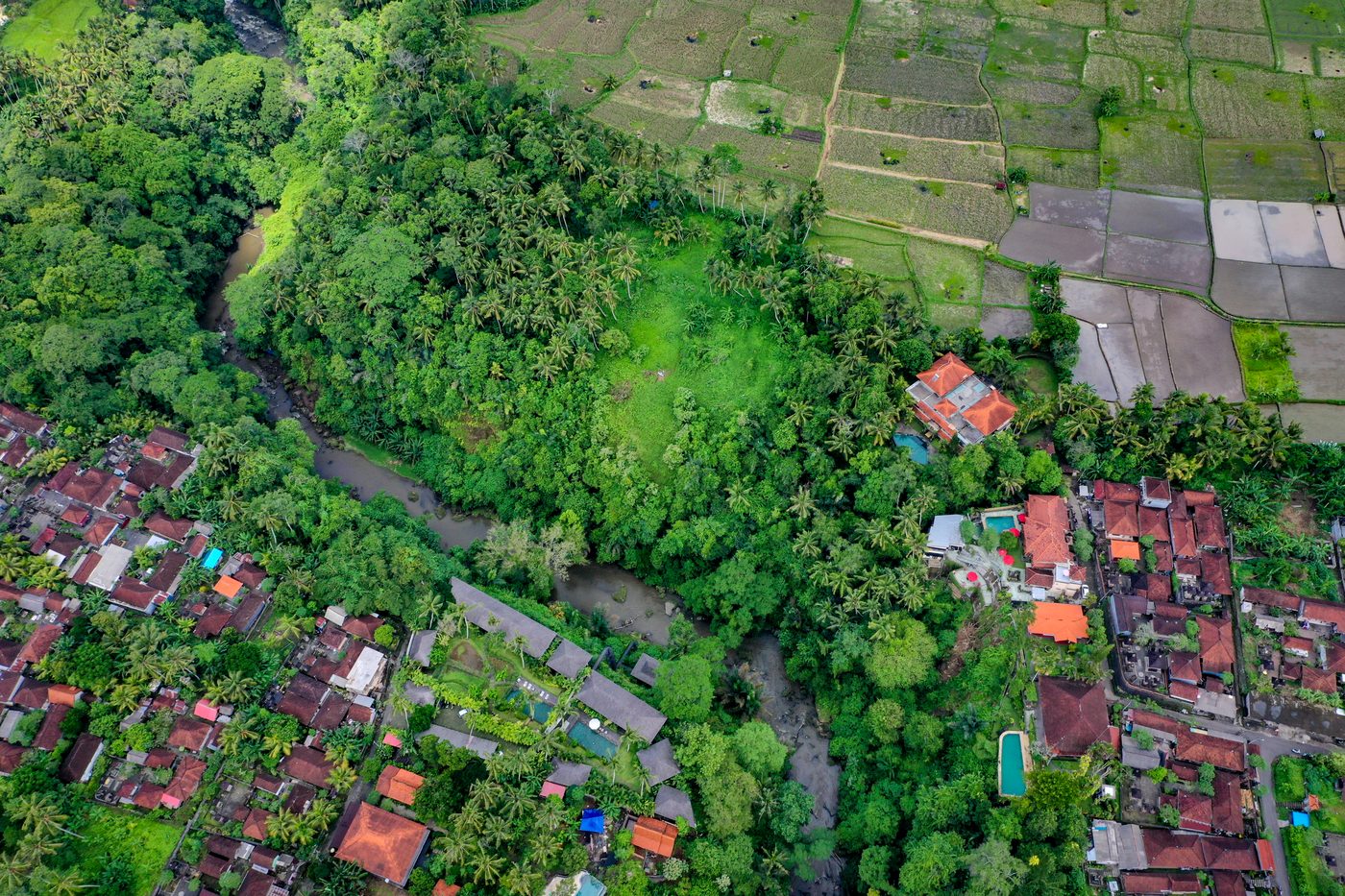
Aerial View - Saraswati Campus & Valley Corridor
Bali International Arrivals 2025
7M+
Record tourism; demand shifting to transformational experiences
Global Wellness Tourism Market
$1.3T by 2030
7% CAGR; Bali is the world's leading wellness destination
Ubud Boutique Hospitality Yields
15%+
Premium experience-led assets outperform coastal market by 3-5x
Speculative EV at Phase 1 Stabilisation
$12M – $18M
On USD 2.2M investment - 5.5x–8.2x indicative multiple
Adjacent to the freehold campus, approximately 70 ares (Stage 1) and 1.5 hectares (Stage 2) of leasehold land are available, extending the development corridor along the valley. The full valley vision encompasses approximately 18 hectares - the freehold is the anchor that makes everything else possible.
Development Plan
Phase 1 -
The Sanctuary Activation
Phase 1 transforms the existing campus into a fully operational boutique regenerative hospitality destination. Target completion: Spring 2027. The build programme is focused, bounded, and designed to generate revenue from the first operating season.
01
Main Villa Renovation (~800 sqm)
Full remodel using natural materials, curved forms, exposed timber and glass. Communal hall, dining room, and 4 primary guest suites. The architectural anchor of the campus.
02
6 Guest Pods (4 solo pavilions + 2 double suites)
Private accommodation on adjacent leasehold land. 35–65 sqm each. Framed views, outdoor bathing, natural material honesty. Raising total campus capacity to 16–22 guests.
03
Practice Pavilion + Amphitheatre
20–30 person yoga, ceremony and event space. Open-sided timber pavilion. 40-seat outdoor fire pit circle for evening programming and ceremony.
04
Wellness Node
Sauna, cold plunge, 2 treatment rooms, outdoor shower stations, river-view deck and tea house. Fully operational wellness circuit positioned as both integrated retreat offering and standalone destination.
05
Regenerative Infrastructure
20kWp solar + 40kWh battery storage, biodigester, rainwater harvesting (50,000L), greywater recycling wetland. Off-grid from day one - both a cost reducer and core brand differentiator.
| PHASE 1 INDICATIVE CAPITAL SUMMARY |
| Freehold acquisition (gross) | USD 1,200,000 |
| Less: prior investment & infrastructure credit | (USD 300,000) |
| Net land cost to investors | USD 900,000 |
| Stage 1 leasehold - 70 ares / 30yr | USD 195,500 |
| Design, professional fees & permits | ~USD 130,000 |
| Renovation, construction & infrastructure | ~USD 660,000 |
| FF&E, brand, launch & working capital | ~USD 230,000 |
| NET NEW CAPITAL REQUIRED | ~USD 2,115,000 |
| PHASE 1 REVENUE MODEL (STABILISED - INDICATIVE) |
| Revenue Stream | Conservative | Optimistic |
|---|
| Boutique hospitality (accommodation) | $800K | $1.05M |
| Hosted retreat programs (12–16/yr) | $480K | $960K |
| Membership community | $250K | $400K |
| Events & private bookings | $100K | $200K |
| Total Annual Revenue | $1.63M | $2.61M |
| Operating costs (40–50% of revenue) | (~$815K) | (~$1.04M) |
| Net Operating Income | ~$815K | ~$1.57M |
Guest Accommodation - Design References
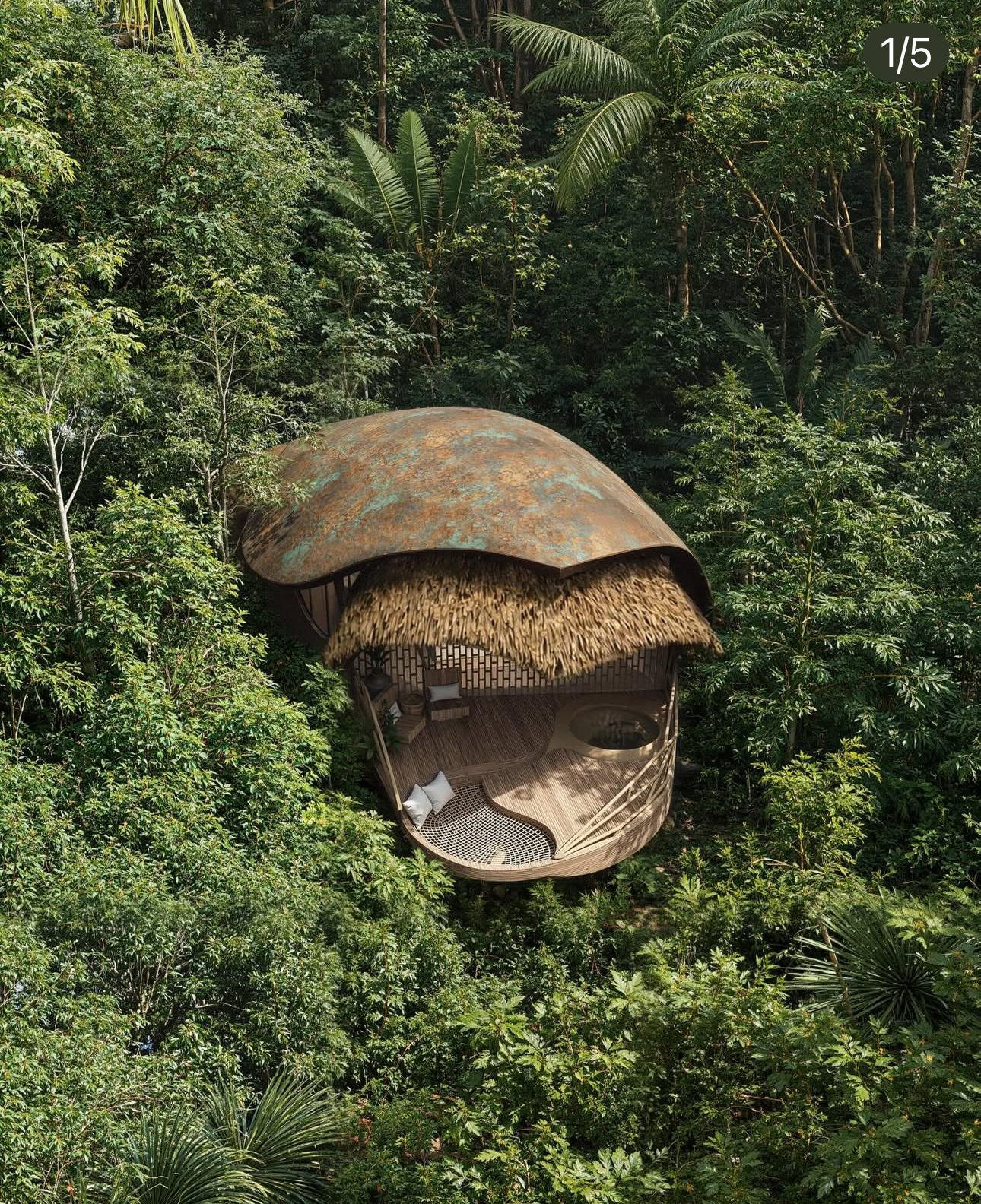
Solo Pavilion - Aerial View
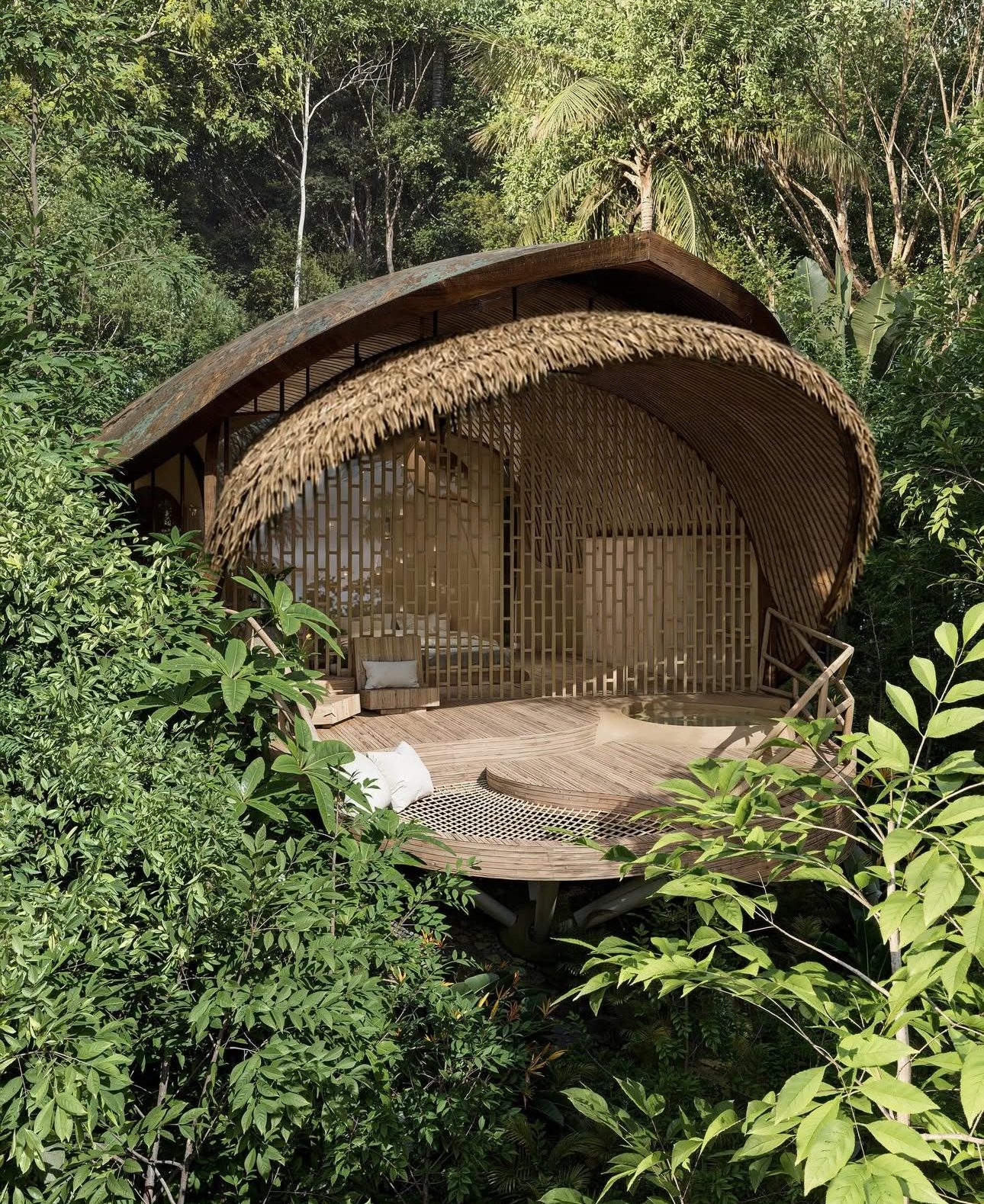
Guest Pavilion - Exterior Concept
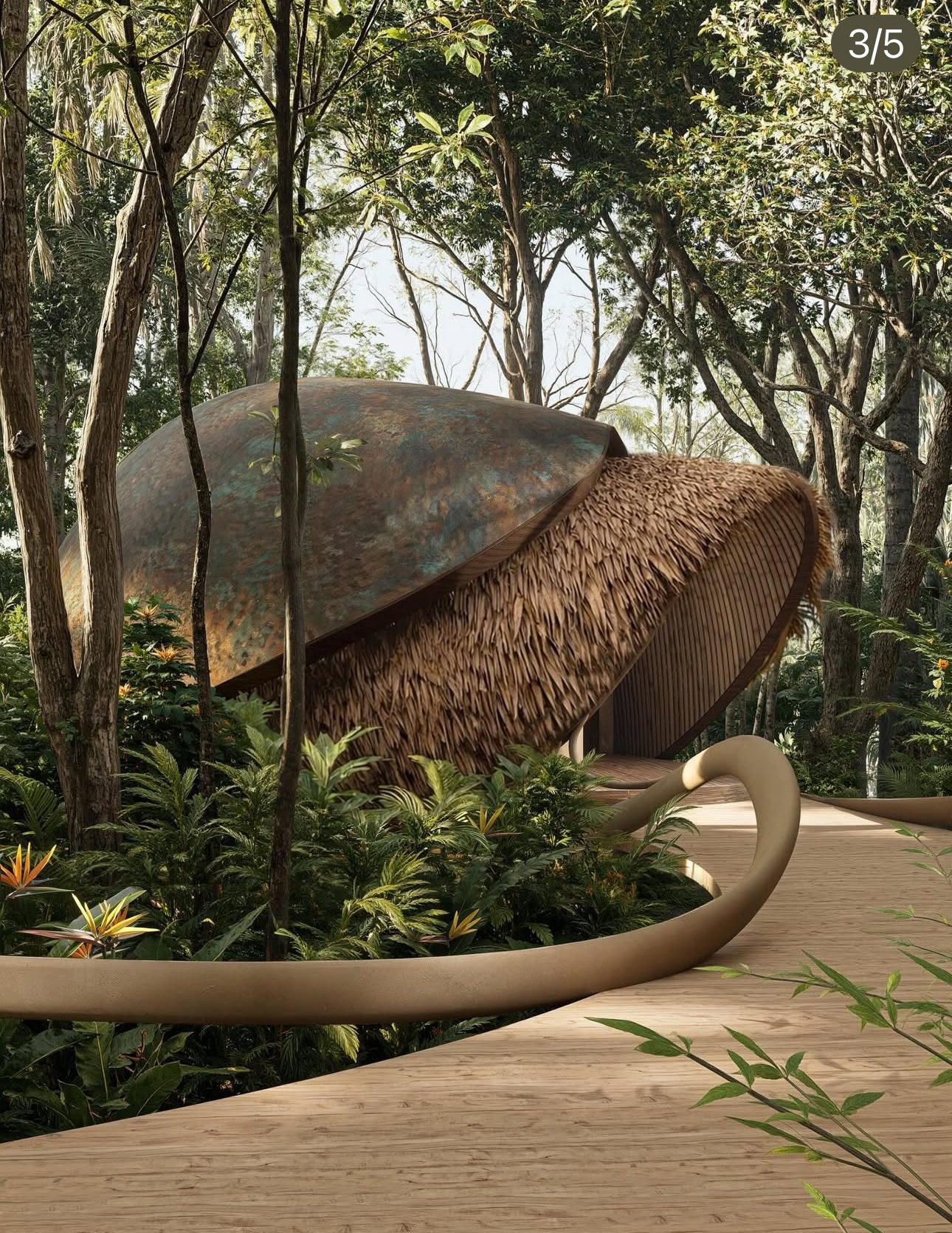
Solo Pavilion - Arrival Approach
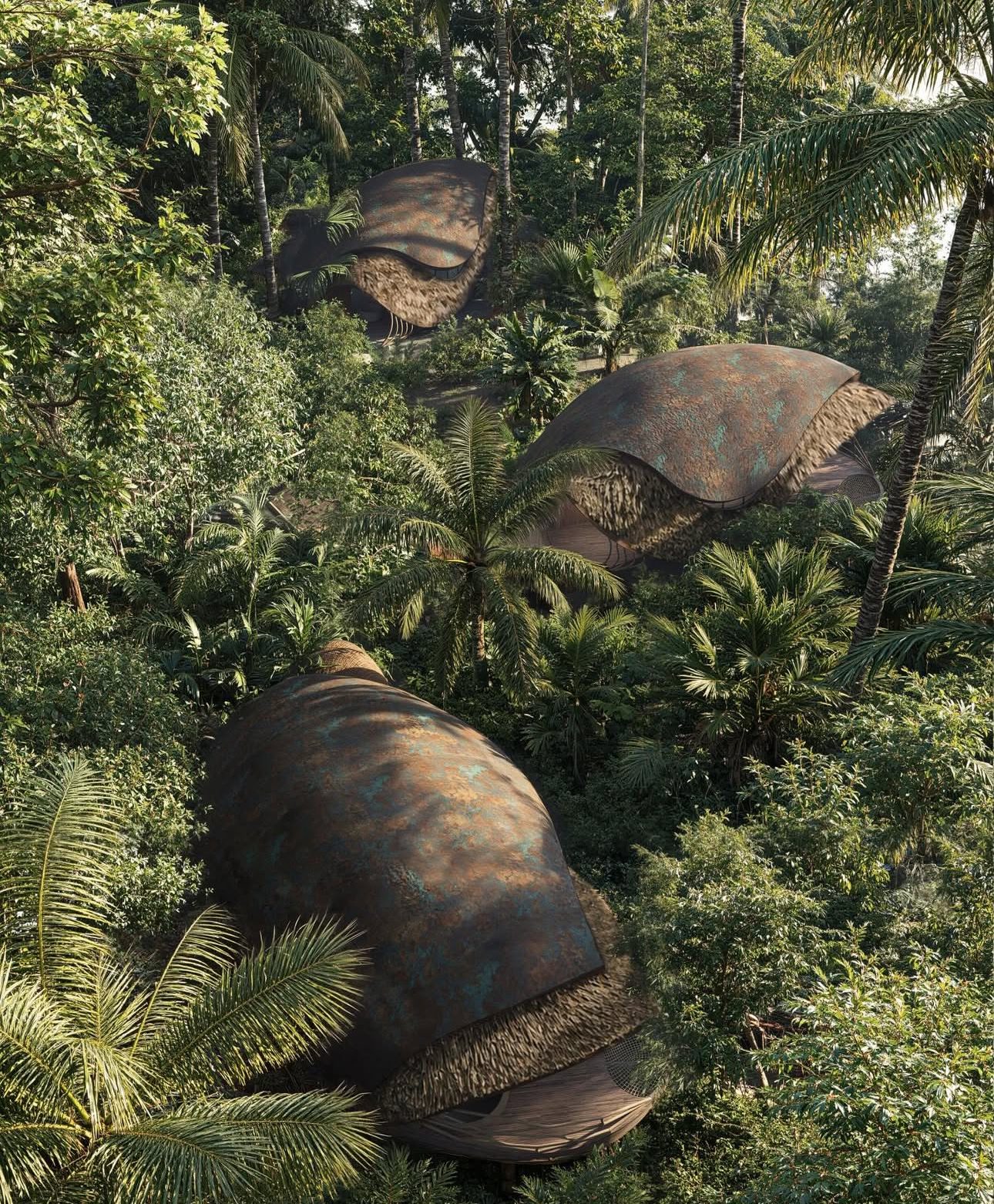
Pod Cluster - Site Integration
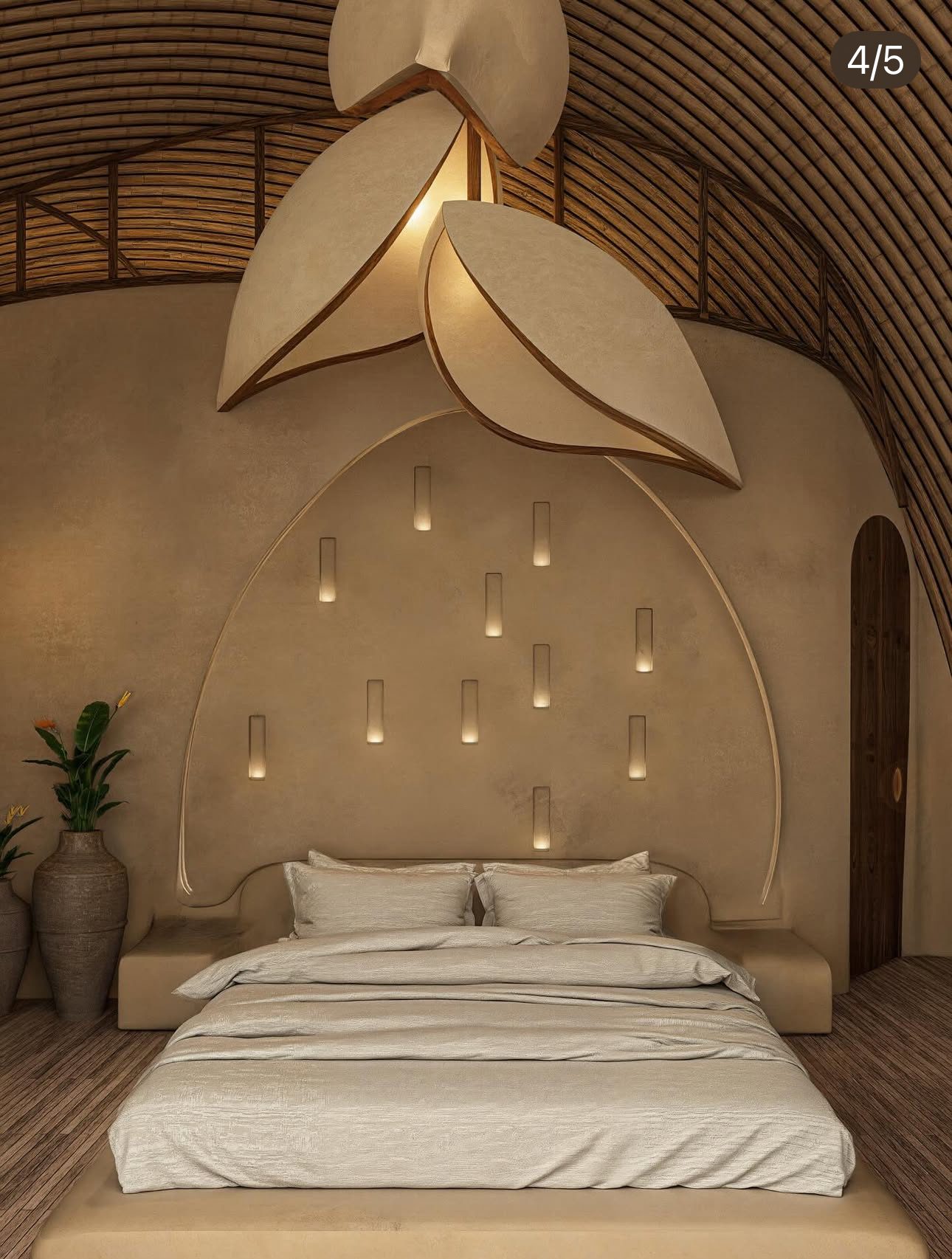
Guest Pavilion - Interior Concept
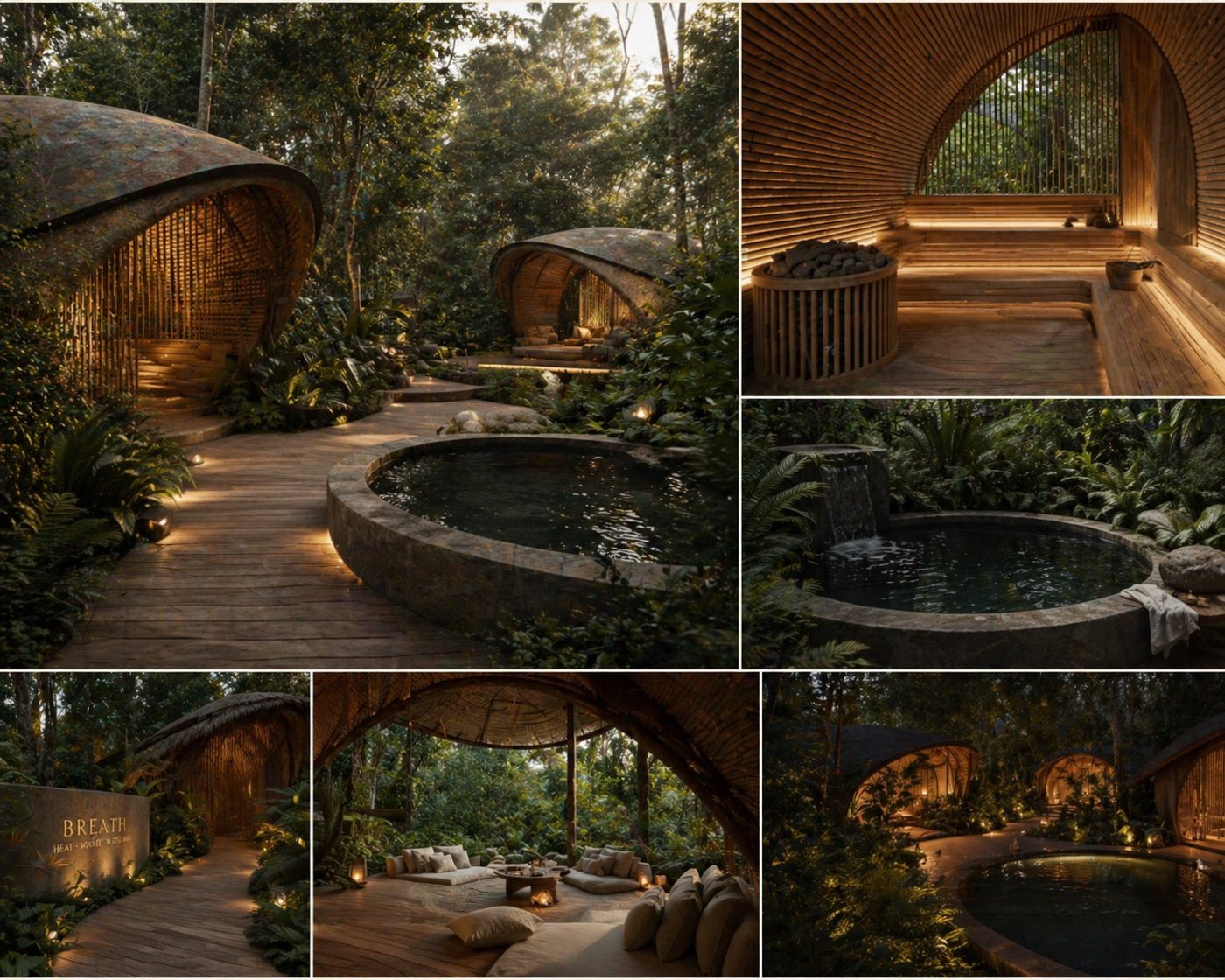
Wellness Node - Sauna, Cold Plunge & Jungle Lounge Concept
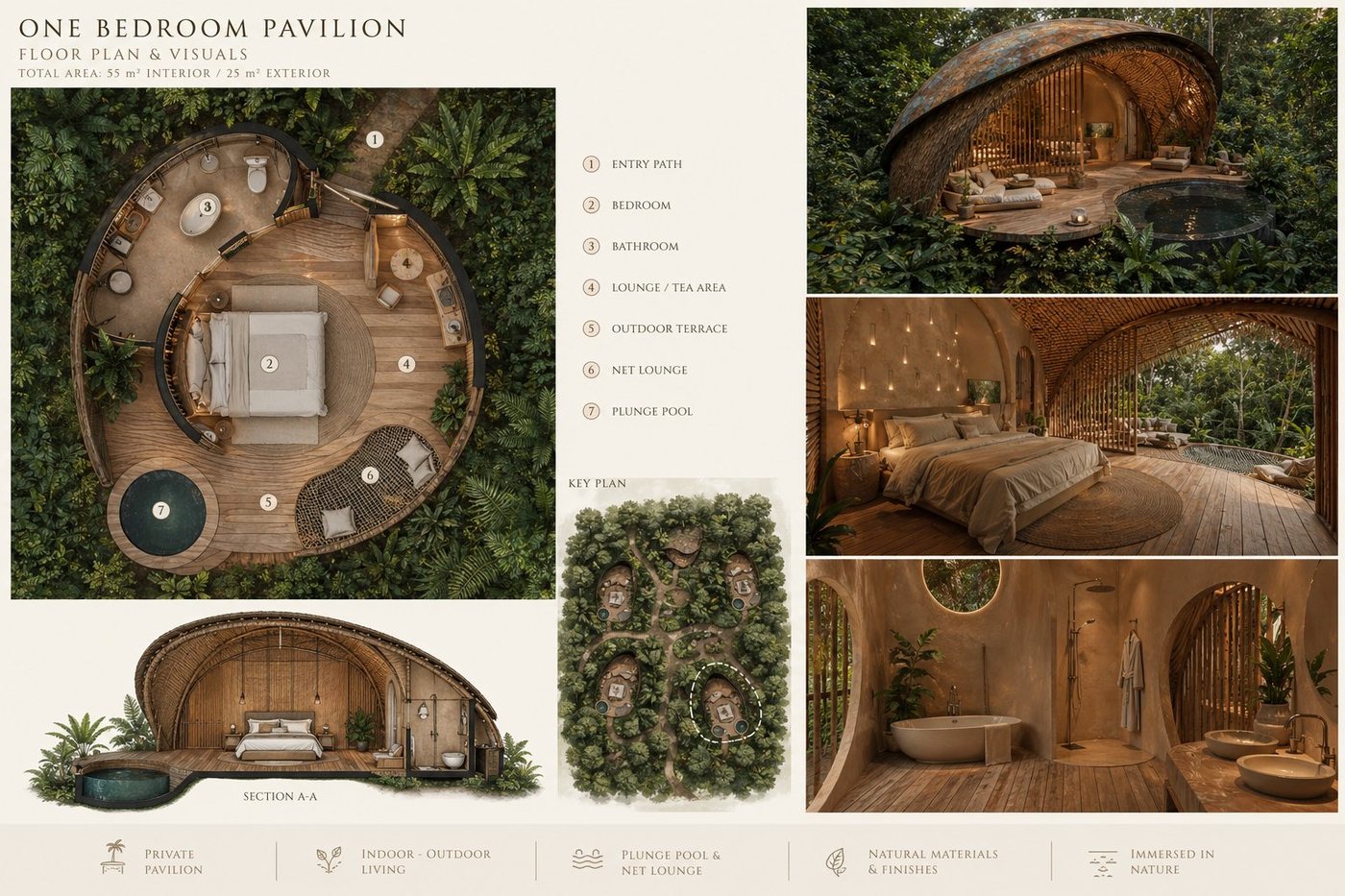
One Bedroom Pavilion - Floor Plan & Design Concept (55m2 Interior / 25m2 Exterior)
Design references shown for concept direction only. Final accommodation design will reflect the architectural language, natural materials, and cultural identity of the Saraswati campus. We are still exploring the design approach that best fits the larger project vision.
A detailed itemised capital expenditure budget, 5-year P&L projection (conservative and optimistic scenarios), and full village scope financials are available for review:
→ Open Full Financial Model (Google Sheets)
Important: All figures presented in this document and in the financial model are speculative projections prepared for initial planning and discussion purposes only. They do not represent final budgets, guaranteed returns, or a formal financial offer. All numbers will be reviewed, revised, and corrected to reflect the final project scope, contractor quotes, independent quantity surveying, and qualified financial advice before any formal investment commitment is made.
Full Financial Model - Detailed capital budget, 5-year P&L (conservative & optimistic), and village scope financials:
→ Open Financial Model (Google Sheets)
Equity Interest Specification - Full Private Placement Memorandum including speculative enterprise valuation, MOIC analysis by option, quarterly distribution models, and complete equity term sheets - available on request.
All figures are speculative projections for planning purposes only. They require independent verification and do not constitute a financial guarantee or formal offer.
All financial figures are indicative projections only. They require independent verification and do not constitute a financial guarantee or formal offer.
The Bigger Picture
Vajra Valley -
The Regenerative Village
→ View Detailed Financial Model - All figures speculative; subject to revision
Phase 1 is the seed. Behind it is a vision for an 18-hectare valley ecosystem - a complete regenerative village designed to reset how human beings live, learn, and relate to land and community. Eight development nodes. An Academy for Regenerative Living. A digital governance and community platform (Vajra OS). A replicable model for conscious community development globally.
| Development Node | Description | Phase |
|---|
| Saraswati Retreat Campus | Hospitality, wellness, retreat programming, membership | Phase 1 |
| Founder Villas (10–20 lots) | Private residential at pre-development pricing; valley integration | Phase 2 |
| Wellness Destination | Flagship spa, hydrotherapy, longevity clinic | Phase 3 |
| Village Commons | Restaurant, organic market, co-working, library, cultural hub | Phase 2–3 |
| Creative Campus | Artist residencies, studios, performance space | Phase 4 |
| Event Pavilion | 300–500 person gatherings, festivals, conferences | Phase 4 |
| Residential Villas (~80 units) | Full residential programme; $950K–$1.2M per unit | Phase 5 |
| Academy for Regenerative Living | 9 interconnected campus nodes; Vajra OS digital platform | Phase 5 |
Total Valley Area
~18 Hectares
Residential Villas
~80 Units
$950K–$1.2M avg sale price
Gross Villa Sales Revenue
~USD 84M
Indicative; Adrian brief estimate
Full Village Stabilised NOI
$8M–$12M / yr
Phase 5 operating revenue streams
Investment Options
Three Ways to
Participate
Three investment structures are available for Phase 1. Each is designed to match different investor profiles, risk preferences, and levels of operational involvement. All include Hak Pakai land-title security on the primary 26 are parcel.
Investment: USD 2,200,000 · Equity: 46%-51% · Role: Co-Director
46%-51% of PT Saraswati Temple Arts PMA. Quarterly profit distributions (minimum 65% of NOI). Full board participation. Buyout right after Year 5 at independently appraised value. Speculative equity value at Phase 1 stabilisation: USD 4.8M – 7.2M. Full village upside (speculative): USD 32M – 48M.
Investment: USD 1,200,000 · Equity: 20% · Preferred Return: 10% p.a.
First-charge security over freehold asset. 10% preferred return accruing monthly from first revenue. 20% equity participation after preferred return is serviced. Conversion to full Option A terms at election after Year 3. Speculative equity value at stabilisation: USD 2.4M – 3.6M + USD 600K cumulative preferred over 5 years.
Investment: USD 600K – 900K + expertise · Equity: 25–30% · GM Role
For investors who bring hospitality or wellness sector expertise alongside capital. Blended capital + expertise contribution. GM employment agreement. 5% NOI performance bonus above USD 800K. Equity vesting over 36 months. Speculative value at stabilisation: USD 3.0M – 5.4M.
A full equity interest specification document - including speculative enterprise valuation, MOIC analysis, distribution models, and equity term sheets - is available on request.
All financial figures are indicative speculative projections only. They do not constitute guaranteed returns. Independent verification by qualified financial advisors and Indonesian legal counsel is required before any investment decision. A KJPP independent property valuation is in progress.
Investment Rationale
Why This Investment
Stands Apart
| What Makes This Defensible |
What Makes This Differentiated |
| 0.46ha freehold anchor asset - the only asset class in Bali that cannot be replicated by leasehold capital |
5 years of active community, programming and cultural infrastructure already in place |
| PT STA PMA fully registered - NIB, permits, KBLI classifications, SPPL environmental compliance |
Ubud ridge positioning - 10 minutes from cultural centre, insulated from coastal oversupply |
| NAV floor: freehold + improvements = USD 3.76M+ even in distress scenario |
Four independent revenue streams - hospitality, retreats, membership, events |
| Off-grid regenerative infrastructure from day one - reduces operational cost exposure |
Vajra Valley 18-hectare development corridor - Phase 1 investor enters at highest MOIC point |
| 8% contingency in build budget; working capital for 12 months included |
Speculative EV at stabilisation USD 12M–18M on USD 2.2M investment = 5.5x–8.2x multiple |
| Hak Pakai title-level security on primary parcel for all investor options |
Replicable model - Vajra OS and Academy IP scalable beyond the physical site |
"The most durable hospitality assets in Bali over the next decade will not be built by capital alone. They will be built by capital aligned with culture, land, and community. That is what Phase 1 of Saraswati Temple Arts represents."
How to Proceed
Investor Pathway -
From Interest to Partnership
01
Initial Enquiry
Express interest and confirm which investment option (A, B, or C) is most aligned with your profile. Request the full Equity Interest Specification document.
02
Due Diligence Package
Receive the full investor due diligence package: project brief, detailed cost estimate, 5-year financial model, legal entity documents, permits, and site documentation.
03
Independent Verification
Engage independent Indonesian legal counsel and financial advisor. KJPP property valuation to be commissioned. Both parties retain counsel before any capital commitment.
04
Term Sheet
Agree and sign a term sheet defining the chosen investment option, equity stake, governance rights, and exit terms. Foundation for the formal legal documents.
05
Term Sheet - Employment & Equity Pathway
Draft a clear term sheet outlining the investor's: Hak Pakai acquisition terms, employment agreement structure (role, compensation, authority), equity participation pathway, and protections for both parties. This becomes the foundation for the formal legal documents.
06
Capital Transfer & Construction Commencement
Funds transferred to project account. Phase 1 construction commences. Spring 2027 investor showcase and operational launch.
The proposed subdivision and Hak Pakai structure is exploratory at this stage. It requires the owner's consent, which is not yet obtained. There may be alternative structures that achieve the same outcome - including a leasehold arrangement between the PMA and the investor that provides equivalent security without requiring title subdivision. Both paths should be explored with counsel simultaneously.
Do not commit capital or sign any documents until the legal framework is formally reviewed and approved by qualified Indonesian legal counsel retained independently by each party.
The Opportunity
Why Now,
Why This
Why Phase 1 entry is the premium opportunity in this development lifecycle:
Bali's coastal villa market is operating under construction moratoriums in Canggu and Seminyak, with 38,000+ active Airbnb listings creating structural oversupply. Ubud is the inverse. Its supply of freehold sanctuary-scale assets is structurally constrained. You cannot replicate this parcel or this community by arriving later.
Phase 1 investors enter at the highest value-creation multiple in the entire 10-year development lifecycle - a speculative 5.5x–8.2x on invested capital at Phase 1 stabilisation, before the valley development multiplies that further. The freehold land alone, appreciating at a historically observed 8–10% per annum, is worth USD 1.49M today against a USD 1.2M acquisition price. The operating business is the compounding layer above it.
This is not a concept. It is a functioning cultural sanctuary, with five years of community proof, a registered PMA legal entity, four freehold land title certificates, and a detailed development plan ready to execute. The only thing missing is the capital partner to activate it.
Saraswati Temple Arts is not a hotel project. It is not a villa development. It is the anchor of an 18-hectare regenerative village ecosystem - a new model for how capital, culture, land, and community produce returns that compound over decades rather than extract over years.
The window for Phase 1 entry at this valuation is defined by a single constraint: the freehold acquisition must proceed. Once the campus is built and operating, the entry multiple available today will not return. The speculative 5.5x–8.2x value creation multiple on Phase 1 investment reflects the risk-adjusted premium of being first.
Bali's coastal villa market is saturated. Ubud's premium experiential market is structurally protected by scarcity, cultural depth, and the global shift toward transformational travel. Saraswati Temple Arts sits at the intersection of all three tailwinds.
We are seeking investors who understand that the most valuable assets of the next decade will not be the ones that extracted the most from their location - they will be the ones that made their location more alive.
For enquiries and the full investor package,
Kita Kavisic
Founder & Vision Director - Saraswati Temple Arts / Project Vajra
padrekita@mail.com · +62 813 38 312 637
Kita Kavisic - Founder, PT Saraswati Temple Arts PMA
Disclaimer: This document is prepared for private discussion purposes only. It does not constitute a binding legal agreement, a regulated financial product, investment advice, or a formal offer of any kind. All financial projections and indicative figures require independent verification. The proposed legal structure requires formal review and approval by qualified Indonesian legal counsel before any formalisation or capital commitment. Each party should retain independent legal advice. All property values are indicative only - a KJPP independent valuation is required. PT Saraswati Temple Arts PMA, NIB 0212210026279, registered in Kabupaten Gianyar, Bali, Indonesia. © 2026 Saraswati Temple Arts. Private & Confidential - not for distribution.